One-page profiles for pupils with SEN: what to include, with examples
A one-page profile is a short summary, ideally in the pupil's own words, of what people like about them, what matters to them and how best to support them. It helps every adult, from the class teacher to a supply teacher or lunchtime supervisor, get things right from day one.
Why one-page profiles work
One-page profiles come from person-centred planning, which puts the child and family at the heart of decisions. They're widely used alongside SEN support plans and EHC plans because they're quick to read and easy to share. A full support plan might run to several pages; the profile pulls out what an adult needs to know before they walk into the room.
What to include
Most profiles use three core headings. You can add more, but keep it to one side of paper.
- What people like and admire about me
- Strengths, interests and personality. This sets a positive tone and gives adults a way to build a relationship.
- What's important to me
- People, routines, objects and activities that matter to the pupil, in their words where possible.
- How best to support me
- Practical, specific strategies that work: "Give me instructions one step at a time and let me repeat them back", not "needs support with instructions".
Many schools also add the barriers to learning, current targets, and any agreed arrangements such as a movement break or a time-out pass.
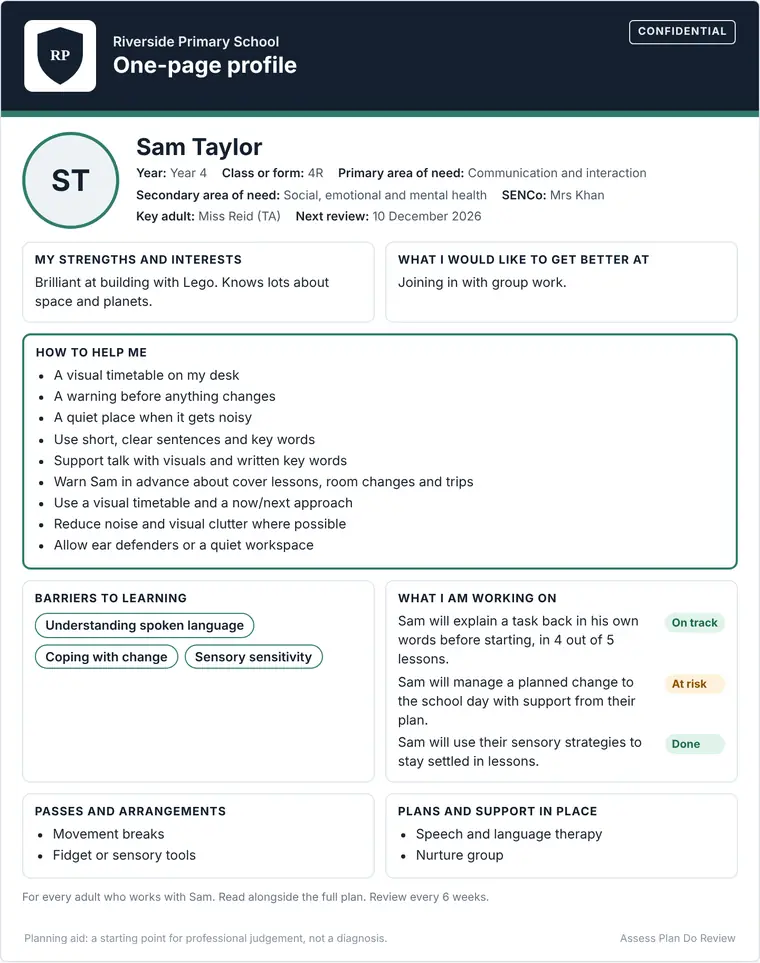
Example 1: a Year 4 pupil
Example 2: a Year 9 pupil (made up)
Priya, Year 9
What people like and admire about me
- I'm funny and I notice when other people are upset.
- I'm really good at drawing, especially manga characters.
What's important to me
- Knowing what's happening next, especially if there's a cover teacher.
- Sitting with my friend Leah in science.
- My headphones at lunchtime, when the canteen is loud.
How best to support me
- Tell me quietly, before the lesson, if the plan has changed.
- Don't ask me to read aloud without warning. I'm happy to if I've had time to look at the text first.
- If I put my head down, I'm overwhelmed, not being rude. Let me use my time-out card.
- Check I've understood homework by asking me to tell you what I need to do.
Tips for writing a good profile
- Write it with the pupil. Use "I" and their own words. For younger children or pupils who don't use speech, use photos, symbols, choices and what parents and staff have observed.
- Be specific. "Give me a 2-minute warning before tidy-up time" is more useful than "struggles with transitions".
- Keep it positive and respectful. The pupil, their parents and any adult might read it.
- Keep it current. Update it at every review, and when the pupil changes class or school.
- Share it with the right people. Make sure supply staff and new teachers see it, and agree with parents who it's shared with.
- Think about privacy. Leave out sensitive medical or family details that aren't needed for day-to-day support, and use a photo only with the right consent. Store and share profiles under your school's data protection policy.
One-page profiles and support plans
A profile doesn't replace the full SEN support plan. It sits alongside it, as the quick-read summary of the plan made through the graduated approach. When the plan and its SMART targets change at a review, update the profile too.